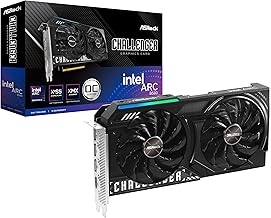
Choosing the right graphics card for a budget-conscious gaming PC build is a critical decision that directly impacts your gaming experience. In the competitive sub-$300 market, two strong contenders have emerged: the Intel Arc B580 and the AMD Radeon RX 7600. Both promise excellent 1080p gaming performance, but they come from different architectural lineages and offer unique value propositions. This comprehensive comparison will delve into their specifications, real-world gaming performance, feature sets, and overall value to help you determine which GPU is the ideal fit for your next system.
Before diving into benchmarks, it's essential to understand the core architectures. The Arc B580 is built on Intel's Xe-HPG architecture, representing the company's push into the discrete GPU market. It's designed to compete directly in the mainstream segment. On the other side, we have the AMD Radeon RX 7600, which leverages the refined and efficient AMD RDNA 3 architecture. This generational leap brings improvements in performance-per-watt and advanced features. For builders looking at options like the Speedster SWFT210 model, understanding these architectural foundations is key to predicting driver maturity, feature support, and long-term performance.
Specifications and Hardware Deep Dive
Let's break down the hardware. The Intel Arc B580 typically features 12GB of GDDR6 memory on a 192-bit bus, giving it a clear advantage in memory capacity and bandwidth for higher-resolution textures. The AMD Radeon RX 7600, like the XFX Speedster SWFT210, comes with 8GB of GDDR6 VRAM on a 128-bit bus. While 8GB is still sufficient for most 1080p games, the trend towards more demanding textures means the B580's 12GB could offer more future-proofing. Both cards are built for a gaming PC build focused on high frame rates at 1080p, but their approaches to memory and core configuration differ significantly, influencing their performance in various titles.
1080p Gaming Performance Showdown
This is where the rubber meets the road. In a wide range of modern titles at 1080p High to Ultra settings, both GPUs deliver highly playable frame rates. The Radeon RX 7600, powered by the AMD RDNA 3 architecture, often shows strengths in traditionally AMD-optimized titles and esports games, easily pushing well beyond 100 fps in titles like Apex Legends and Fortnite. The Arc B580 has seen remarkable driver improvements since launch and now competes fiercely, sometimes taking the lead in DirectX 12 titles and those leveraging Intel's XeSS upscaling technology. For pure rasterization performance in the latest AAA games, the battle is incredibly close, making features, software, and price even more critical differentiators.
Features, Software, and Ecosystem
Beyond raw fps, the user experience is shaped by features. The RX 7600 boasts full support for AMD's FidelityFX Super Resolution (FSR), which is widely adopted in games, and the low-latency benefits of Radeon Anti-Lag. Its AMD graphics card heritage also means excellent compatibility and generally mature drivers for a plug-and-play experience. The Intel Arc B580 counters with its own XeSS upscaling, which can deliver impressive image quality and performance boosts, and support for AV1 encoding, a boon for streamers. Intel's driver team has been aggressive with updates, rapidly closing the stability and performance gap. Choosing between them may come down to which ecosystem's features you value more.
Value Proposition: Price vs. Performance
When labeling either of these as a budget graphics card, value is paramount. The Radeon RX 7600, particularly in partner models like the XFX Speedster SWFT210, often hits a very attractive street price. It offers a known quantity with reliable performance and low power consumption. The Arc B580, with its larger 12GB frame buffer, presents itself as the potential longevity play. If your gaming habits lean towards modded games or titles with massive texture packs, the extra VRAM could prevent stuttering and allow for higher-quality settings down the line. This makes the B580 a compelling option for the forward-thinking budget gamer who wants their investment to last.
Power, Cooling, and Partner Designs
Thermals and acoustics matter. The XFX Speedster SWFT210 cooler on the RX 7600 is a proven design, typically keeping the GPU cool and quiet under load, which is great for smaller cases. The card's modest power draw also simplifies PSU requirements. Partner models of the Arc B580 vary, but many feature robust cooling solutions to manage its power envelope. When selecting either card, consider your case's airflow and the quality of the specific cooler. A well-cooled GPU maintains higher boost clocks for longer, directly translating to smoother gameplay. Both the RX 7600 and B580 are efficient enough for most standard 550W-650W power supplies in a balanced gaming PC build.
The Verdict: Which Budget GPU Should You Choose?
So, who wins the battle for the best 1080p gaming GPU? The answer is nuanced. If your priority is out-of-the-box stability, mature drivers, and excellent performance in a wide swath of games with lower power consumption, the AMD Radeon RX 7600, exemplified by the XFX Speedster SWFT210, remains a fantastic and safe choice. However, if you are intrigued by a competitive alternative with more GDDR6 VRAM, rapid driver improvements, strong DX12 performance, and cutting-edge features like AV1 encoding, the Intel Arc B580 represents a bold and high-value contender. For gamers willing to embrace Intel's growing platform, the B580 offers compelling future-proofing potential. Ultimately, both cards validate that today's budget segment delivers phenomenal gaming experiences that were unthinkable just a few years ago.