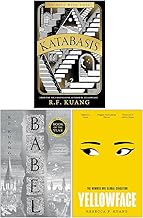
In the realm of speculative fiction, few narrative structures are as powerful and enduring as the katabasis. This ancient trope, a literal or figurative descent into an underworld, has shaped myths from Orpheus and Eurydice to Dante's Inferno. Today, it finds a stunningly relevant and brutal new expression in R.F. Kuang's acclaimed novel, Babel: Or the Necessity of Violence: An Arcane History of the Oxford Translators' Revolution. Far from a simple adventure, the descent in Babel is a multi-layered journey into the heart of linguistic imperialism, personal trauma, and the violent foundations of empire.
At its core, Babel is a fantasy novel of ideas, set in an alternate 19th-century Oxford where translation and silver-working magic fuel the British Empire's dominance. The protagonist, Robin Swift, is plucked from Canton and groomed to become a translator at the prestigious Royal Institute of Translation—Babel. His journey into this glittering academic world is, initially, an ascent. Yet, Kuang masterfully inverts this trajectory. Babel, the towering center of knowledge and power, becomes the underworld itself. Robin's katabatic journey is not into dank caves but into the polished, book-lined halls where the real violence of empire—cultural erasure, economic exploitation—is theorized, systematized, and magically enforced.
The novel's arcane history is built on the premise that meaning lost in translation can be captured in silver bars, creating powerful effects. This magic is the engine of colonial power. Therefore, Robin's descent is an epistemological one. He must descend through layers of accepted history and scholarship to uncover the brutal truths they obscure. His education is a process of disillusionment, a peeling away of the genteel facade of academia to reveal the rot beneath. This intellectual descent is mirrored in his emotional and moral journey, as he grapples with his complicity, his survivor's guilt, and the fading memory of his homeland.
Kuang uses the katabasis to explore the necessity of violence, as indicated by the book's provocative subtitle. In myth, the hero often descends to retrieve something or someone: love, knowledge, a part of themselves. In Babel, Robin and his cohort descend into the revolutionary ideology that violence may be the only language the empire understands. Their journey into this moral abyss—questioning pacifism, debating sabotage, and confronting the cost of rebellion—is the central, harrowing arc of the Oxford Translators' revolution. The underworld here is the space of radicalization, where hope is stripped away and replaced with a grim, determined resolve.
The personal descent is also a journey into identity. Robin, caught between China and Britain, between the colonized and the collaborator, must descend into the fragmented core of his own self. The novel asks: What is left of a person after they have been translated—remade—by an imperial power? His relationships, particularly his fraught connection with his guardian Professor Lovell, serve as gateways to this psychological underworld, forcing him to confront abandonment, manipulation, and the ghost of the boy he might have been.
Furthermore, Kuang reimagines the classical trope by making the katabasis a collective experience. It is not just Robin's journey, but that of his friends Ramy, Victoire, and Letty. Each represents a different relationship to the empire's underworld, and their shared descent binds them in tragedy and purpose. This reframes the typically solitary heroic quest into a poignant story of solidarity and shared trauma within the dark academic setting, making the eventual schisms all more devastating.
In conclusion, Babel stands as a monumental work in modern speculative fiction precisely because of its sophisticated use of katabasis. R.F. Kuang takes an ancient narrative structure and plunges it into the urgent politics of language, power, and resistance. The novel argues that before one can rise up against an oppressive system, one must first undertake a painful, essential descent to understand its true depths. For readers, the journey through Babel is itself a form of katabasis—a challenging, illuminating, and ultimately transformative descent into the dark heart of history and the fiery forge of revolution. It is a necessary, if harrowing, journey that redefines what fantasy can achieve.