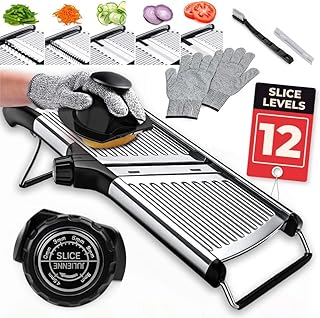
For home cooks and professional chefs alike, the Mandoline Slicer is a game-changer, promising uniform slices, juliennes, and waffle cuts in seconds. Yet, this powerful tool is often underutilized or, worse, used unsafely, leading to frustration and the dreaded kitchen injury. Moving beyond basic tutorials, this guide delves into the critical mistakes that prevent you from achieving mandoline mastery. By understanding and avoiding these common pitfalls, you can transform this tool from a feared gadget into your most trusted kitchen companion, unlocking a world of culinary precision and efficiency.
Mistake #1: Skipping the Cut-Resistant Gloves (The Most Dangerous Oversight)
This is the cardinal sin of mandoline use. Many users, lured by a false sense of control or simple haste, forego the protective gear. The blades on a quality mandoline, like those found in a stainless steel mandoline, are incredibly sharp to perform their job. A single slip can result in a serious cut. The included cut-resistant gloves are not a marketing gimmick; they are essential safety equipment. Think of them as seatbelts for your fingers. Always, without exception, wear them when the mandoline is in use, especially when you're processing the last bits of a vegetable or fruit.
Mistake #2: Incorrect Blade Selection and Adjustment
A versatile adjustable mandoline comes with multiple blades and thickness settings. A common error is using the wrong blade for the desired cut or failing to secure the adjustment mechanism properly. Using a julienne blade for a thick potato slice will not work, and a loosely set thickness dial can shift during use, ruining consistency and safety. Before you start, double-check that the correct blade is securely locked in place and the thickness dial is clicked firmly into your desired setting. Consult your manual; knowing which blade creates which cut is fundamental.
Mistake #3: Poor Hand Positioning and the "Finger-Guard Fumble"
Even with gloves, proper technique is non-negotiable. Never place your flat palm on the food pusher. Use the heel of your hand to apply firm, even pressure. The food pusher or guard is your best friend—use it until the item is too small to hold safely. The moment you think, "I can just hold this last bit with my fingers," is when accidents happen. If the item becomes too small for the guard, stop. It's better to waste a small piece of carrot than to risk a finger. This principle is crucial for all vegetable slicer operations.
Mistake #4: Using a Dull or Improperly Cleaned Mandoline
While high-quality stainless steel mandoline blades stay sharp for a long time, they are not immortal. A dull blade requires more force, increasing the risk of slipping and crushing food rather than slicing it cleanly. Furthermore, improper cleaning—like tossing the blades into a sink full of soapy water or using abrasive scrubbers—can damage the edges and the housing. Always hand-wash the blades carefully with the non-abrasive side of a sponge, dry immediately, and store them securely. A clean, sharp blade is a safe and efficient blade.
Mistake #5: Attempting to Slice Unsuitable Foods
Mandolines excel with firm, uniform vegetables and fruits: potatoes, carrots, cucumbers, zucchini, apples. Where people get into trouble is with irregularly shaped, very hard, or very soft items. Trying to slice a small, round cherry tomato or a rock-hard winter squash is asking for trouble. For very hard items, they may be too dense for the blade mechanism. For soft items, they can mush. For bones, pits, or extremely irregular shapes, use a knife. Know your tool's limits. An onion slicer function works best on halved or quartered onions, not whole ones.
Mistake #6: Neglecting Stability and Workspace Setup
A wobbly mandoline is a hazard. Many models have non-slip feet or suction cups—ensure they are clean and properly engaged on your countertop. Place a damp cloth underneath if needed for extra stability. Your workspace should also be prepared. Have a bowl or container ready to catch the sliced food directly opposite the blade exit. Fumbling for a container mid-slice breaks your focus and rhythm. A stable tool and an organized workspace are foundational to safe and smooth operation with any kitchen mandoline.
Mistake #7: Rushing and Losing Focus
Speed is a benefit of the mandoline, but haste is its enemy. Rushing leads to careless hand placement, skipping safety steps, and improper technique. Treat each slicing session with respect and focus. Slow, controlled, and deliberate strokes produce perfect results and keep your fingers safe. The goal is consistent, thin slices—not speed records. This mindful approach is what separates a novice from a proficient user of a food slicer.
Mastering Your Mandoline: A Path to Culinary Confidence
Avoiding these seven common mistakes transforms your relationship with the mandoline slicer. It stops being a daunting tool and becomes an extension of your culinary skill. The precision it offers—perfectly even potato slices for gratin, delicate cucumber ribbons for salad, consistent julienned carrots for stir-fry—elevates your cooking presentation and ensures even cooking. By prioritizing safety through gloves and technique, maintaining your tool, and using it mindfully for appropriate tasks, you unlock its true potential. Embrace the process, respect the blade, and let your Mandoline Slicer handle the tedious work, so you can focus on the creativity and joy of cooking.