Few films have captured the chaotic spirit of an era and transformed it into a lasting cinematic touchstone quite like Fear and Loathing in Las Vegas. More than just a movie, it's a sensory assault, a philosophical rant, and a hilarious, horrifying portrait of the American Dream's dark underbelly. Directed by the visionary Terry Gilliam and starring a perfectly unhinged Johnny Depp, this adaptation of Hunter S. Thompson's seminal work has cemented its place as the definitive cult classic film. This guide delves deep into the film's creation, its themes, its tumultuous reception, and its enduring legacy in psychedelic cinema.
From Gonzo Pages to Gilliam's Vision: The Making of a Masterpiece
The journey of Fear and Loathing in Las Vegas from book to screen was as fraught and drug-addled as the story itself. Hunter S. Thompson's "gonzo journalism" masterpiece, a semi-autobiographical account of a trip to Las Vegas, was long considered unfilmable. Its first-person, stream-of-consciousness narrative lacked a conventional plot, relying instead on a series of escalating, chemically-enhanced episodes. Enter Terry Gilliam, the former Monty Python animator known for his visually dense and imaginatively twisted films like Brazil and 12 Monkeys. Gilliam was perhaps the only director capable of visualizing Thompson's internal chaos, translating the paranoia, euphoria, and surrealism onto the screen with a distinct, grotesque beauty.
Central to the film's authenticity was Johnny Depp's transformative performance as Raoul Duke, Thompson's alter-ego. Depp didn't just act the part; he lived it, moving into Thompson's basement, studying his mannerisms, and even borrowing (and allegedly damaging) some of the author's personal belongings. This commitment resulted in a portrayal that goes beyond imitation, embodying the very soul of gonzo. Benicio del Toro's Dr. Gonzo, Duke's 300-pound Samoan attorney, is equally iconic, a monument to id and aggression. Their chemistry is the volatile engine of the film, a co-dependent nightmare that is both terrifying and darkly comedic.
Bat Country: Decoding the Themes of Fear and Loathing
On the surface, Fear and Loathing is a story about two men on a drug binge. But to view it only as such is to miss its profound critique. The film is a eulogy for the 1960s counterculture dream. Duke and Gonzo arrive in Las Vegas—the gleaming temple of capitalist excess—on a mission that quickly disintegrates. Their search for the "American Dream" becomes a descent into a neon-lit hellscape, mirroring how the idealism of the previous decade had curdled into commercialism and cynicism by the early 1970s.
The famous "wave speech" delivered by Depp is the film's philosophical heart: "There was a fantastic universal sense that whatever we were doing was right, that we were winning... And that, I think, was the handle—that sense of inevitable victory over the forces of Old and Evil." The film captures the moment that wave broke and rolled back, leaving behind a sense of fear and loathing. This makes it a pivotal counterculture movie, not one that celebrates rebellion, but one that mourns its failure and examines the hangover. The Fear And Loathing In Las Vegas experience is, therefore, a historical document, using surrealism and satire to expose the emptiness at the core of post-60s America.
A Box Office Bomb to Cult Phenomenon: The Film's Rocky Reception
Upon its release in 1998, Fear and Loathing in Las Vegas was met with bewilderment and hostility from mainstream critics and audiences. Many were repelled by its abrasive tone, lack of moral center, and relentless depiction of drug use. It was a commercial failure. However, true to the nature of cult films, it found its audience away from the multiplex. On home video and through late-night cable TV screenings, the film began to gather a dedicated following. Fans dissected its dialogue, embraced its anti-establishment ethos, and recognized the artistry in its chaos.
This slow-burn success is a testament to the film's authenticity. It didn't compromise Thompson's vision to be palatable. For a generation disillusioned by polished, focus-grouped Hollywood product, Gilliam's unfiltered nightmare was a breath of foul, chemically-tinged air. The film's dialogue entered the lexicon, its imagery became iconic, and its status grew with every passing year. Today, it's frequently cited as one of the greatest Terry Gilliam film and a career-defining role for Johnny Depp, a far cry from its initial reception.
Building the Ultimate Fear and Loathing Collection
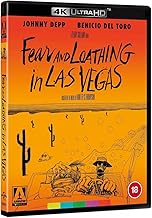
For the devoted fan, owning Fear and Loathing is a rite of passage. The film's journey on physical media reflects its cult status. Early DVD releases were prized possessions. The Criterion Collection's subsequent editions elevated it to high-art status, packed with invaluable extras like audio commentary by Gilliam, Depp, del Toro, and producer Laila Nabulsi, along with deleted scenes and featurettes on Thompson's life and work. For the ultimate aficionado, securing a copy of the Fear and Loathing in Las Vegas special edition is essential for any serious DVD collection.
When evaluating a purchase, look for editions that preserve Gilliam's intended color-saturated, grainy visual style—a crucial element of the film's psychedelic aesthetic. The sound design, a chaotic mix of source music, original score, and disturbing audio effects, is also paramount. A high-quality transfer ensures you experience every twisted detail of the Mint Hotel carpet and every paranoid whisper in a casino bathroom stall as intended.
The Enduring Legacy: Why Fear and Loathing Still Matters
Over two decades later, Fear and Loathing in Las Vegas has lost none of its power to shock, disgust, and enlighten. Its themes feel eerily prescient in an age of information overload, political polarization, and curated social media realities. The film's depiction of a society lost in its own hallucinations resonates strongly. It remains a crucial text for understanding a certain strand of American madness, a cautionary tale that is also, paradoxically, a celebration of absolute, anarchic freedom.
Its influence permeates popular culture, from music videos to fashion to the very language of filmmaking. It stands as the ultimate monument to Hunter S. Thompson's gonzo legacy, perfectly captured by Gilliam and Depp. More than a Johnny Depp movie, it is a cultural artifact—a wild, ugly, beautiful, and essential piece of cinema that continues to find new acolytes willing to take the trip to Las Vegas and beyond. The wave may have broken, but the film ensures the feeling of that moment—the hope, the madness, and the devastating crash—is forever preserved.


![Fear and Loathing in Las Vegas [DVD]](https://m.media-amazon.com/images/I/91RZMbnPpyL._AC_UY218_.jpg)
![Fear and Loathing in Las Vegas (The Criterion Collection) [4K UHD]](https://m.media-amazon.com/images/I/815Dxqc0X7L._AC_UY218_.jpg)
![Fear and Loathing in Las Vegas [Blu-ray]](https://m.media-amazon.com/images/I/71kZZqdD57L._AC_UY218_.jpg)
![Fear and Loathing in Las Vegas (The Criterion Collection) [Blu-ray]](https://m.media-amazon.com/images/I/81h7QOrWU6L._AC_UY218_.jpg)