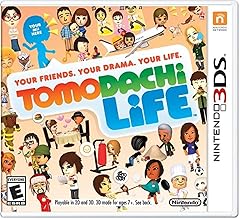
Welcome to the wonderfully weird and endlessly entertaining universe of Tomodachi Life. Released for the Nintendo 3DS, this life simulation game took the concept of virtual worlds and injected it with a heavy dose of absurdity, charm, and pure Nintendo magic. Unlike traditional sims focused on resource management or city-building, Tomodachi Life puts the spotlight on the personalities, relationships, and daily dramas of your Mii characters. It's a game where your friends, family, celebrities, or original creations come to life on a bustling island, forming friendships, falling in love, starting feuds, and requesting everything from hamburgers to new hairstyles.
For many, Tomodachi Life represents the pinnacle of quirky, handheld entertainment. Its appeal lies in its emergent storytelling. You don't directly control the Miis; instead, you influence their world by fulfilling their needs, solving their problems, and giving them gifts. The real joy comes from watching the unpredictable interactions unfold. Will your stoic uncle fall for the pop star you imported? Will your best friend's Mii get into a silly argument with your pet's Mii over a song? The game is a delightful sandbox of social chaos, making every play session unique. As a Nintendo best-seller, it captured hearts not with high-stakes action, but with its heartfelt and hilarious simulation of life's little moments.
What is Tomodachi Life? Understanding the Gameplay
At its core, Tomodachi Life is a life simulation where you populate an island with Mii characters. These Miis can be imported from your Nintendo 3DS system, created from scratch using the robust editor, or even generated via QR codes. Once on the island, they move into apartments, develop distinct personalities (outgoing, cool, stubborn, etc.), and begin living their lives. Your role as the player is that of an overseer and problem-solver. Miis will approach you with requests, which range from simple ("I'm hungry!") to complex ("I have a crush on someone, help me confess!"). Fulfilling these requests increases their happiness level and often triggers new events.
The gameplay loop is deceptively simple but deeply engaging. You'll spend time:
- Managing Needs: Feeding Miis, buying them clothes, and furnishing their apartments from the in-game shops.
- Fostering Relationships: Introducing Miis to each other, encouraging friendships, and playing matchmaker to spark romances that can lead to marriage and even babies.
- Solving Problems: Acting as a therapist, mediator, and advice columnist for your island's inhabitants. This is where much of the game's humor shines, as the problems are often exaggerated and silly.
- Enjoying Mini-Games & Events: Miis perform in concerts, play mini-games like Tomodachi Quest, and participate in island-wide events like the Fashion Show or Rap Battle.
The lack of direct control is a feature, not a bug. It turns the game into a living, breathing diorama where you are constantly surprised by the outcomes of your interventions.
Creating Your Island: The Art of the Mii
The soul of any Tomodachi Life save file is its cast of Mii characters. The game's longevity is directly tied to the creativity and personal connection you invest in populating your island. While you can use generic Miis, the experience is profoundly enriched by importing people you know. Seeing your boss's Mii have a dream about being a famous singer, or your sibling's Mii develop a love for a food they hate in real life, creates a layer of meta-humor that is uniquely compelling. The Mii editor in Tomodachi Life is exceptionally detailed, allowing for precise customization of faces, voices, and personalities.
A pro tip for island management is diversity. Don't just add 20 copies of your friends. Create a mix of ages, personalities, and appearances. Add a few celebrities or historical figures for fun. This diversity ensures a wider range of interactions and relationship dynamics. A child Mii will have different interests and problems than an adult Mii. A "cool" personality Mii will interact with the world differently than a "kind" one. This careful curation is what transforms a collection of digital avatars into a believable (if bizarre) community. For the ultimate collection, you can explore our official Tomodachi Life - Nintendo 3DS product page to start or expand your journey.
Deep Dive: Advanced Features and Secrets
Beyond the daily request loop, Tomodachi Life is packed with content that rewards dedicated players. One of the most beloved features is the Concert Hall. Here, you can compose songs by inputting phrases, and your Miis will sing them with auto-tuned voices in various musical styles. The results are often hilarious and surprisingly catchy. Sharing these song QR codes with other players was a huge part of the game's community.
Another layer is Tomodachi Quest, a charming RPG-style mini-game where you send a party of Miis on a text-based adventure. They'll encounter monsters (like the "Awkward Silence") and use food items as attacks. It's a delightful diversion that also yields rare items for your main island. Furthermore, the game is full of Easter eggs and rare events. Certain food combinations can trigger unique reactions. Miis can have dreams that you can "enter," leading to surreal mini-scenarios. Special travelers, like the mysterious Look-alike or the Singer, will occasionally visit the island, offering unique opportunities for interaction and item collection.
Why Tomodachi Life Remains a Cult Classic
Years after its release, Tomodachi Life maintains a passionate fanbase. Why does this quirky simulation hold such staying power? First, its unpredictability is its greatest asset. No two islands are the same, and the emergent stories players share online—from epic love triangles to bizarre family trees—create a sense of shared experience. Second, its wholesome yet subversive humor appeals to a wide audience. The game is family-friendly but written with a wit that adults appreciate, often poking fun at the mundane dramas of everyday life.
Finally, it represents a specific, golden era of handheld gaming on the Nintendo 3DS. It was a game designed for short, daily check-ins, perfect for a portable system. The use of StreetPass to exchange Miis and data with other players added a wonderful social layer that feels nostalgic today. In an age of online multiplayer shooters and massive open worlds, Tomodachi Life's gentle, observational, and personal simulation offers a unique and comforting escape. It's less a game you "beat" and more a digital petri dish of personality that you nurture over time.
Getting the Most Out of Your Island Life
Ready to become the ultimate island overseer? Here are some final, actionable tips:
- Check In Daily: New requests, shop stock, and events refresh daily. A quick daily session keeps the island lively and progressing.
- Experiment with Voices: Don't just use the default voice for Miis. The voice pitch and tone dramatically affect their singing and speaking, adding to their individuality.
- Use Food as a Social Tool: Giving a Mii their favorite food skyrockets their happiness. Giving them their hated food leads to funny (and sometimes profitable) reactions. Experiment!
- Embrace the Chaos: Don't reload if something "bad" happens, like a breakup or a fight. These conflicts create story and give you new problems to solve, which is the core of the game.
- Connect with Others: While the online services have wound down, seek out communities online to share QR codes for Miis, songs, and stories. The legacy of player creativity is vast.
Whether you're a newcomer discovering this gem or a veteran revisiting your old island, Tomodachi Life offers a one-of-a-kind experience. It's a testament to Nintendo's ability to find fun in the simplest, most human concepts. By giving a platform to our digital selves and letting them run amok, it created a virtual life game that is, in turns, hilarious, touching, and endlessly surprising. Fire up your Nintendo 3DS and see what stories your island will tell today.


