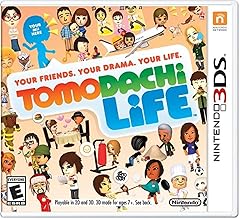
For many in the West, the wacky, unpredictable world of Tomodachi Life on the Nintendo 3DS was a delightful surprise. But this life simulation phenomenon didn't spring from nowhere. Its roots are firmly planted in the Nintendo DS era with a Japan-exclusive title that laid the groundwork for the global hit. This deep dive explores the journey from its humble DS beginnings to its status as a beloved cult classic, examining the gameplay, cultural impact, and enduring legacy of Nintendo's most eccentric social sim.
The story begins not with Tomodachi Life, but with Tomo-dachi Collection (Friend Collection), released exclusively in Japan for the Nintendo DS in 2009. Developed by Nintendo SPD, this title introduced the core concept: populating an island with Mii characters based on yourself, friends, family, and celebrities, then watching their daily lives unfold with absurd, algorithm-driven spontaneity. The DS hardware, with its dual screens and touch interface, was the perfect incubator for this novel idea, allowing for intuitive Mii creation and island management.
The original Tomodachi Collection was a massive success in Japan, selling millions of copies and proving there was a huge appetite for this brand of passive, observational comedy. Its gameplay loop of solving Mii's problems, giving them gifts, and witnessing random interactions like arguments over food or impromptu concerts created endless shareable moments. This success directly paved the way for the enhanced 3DS sequel, which would eventually be localized for a worldwide audience.
From Tomodachi Collection to Tomodachi Life: A Global Journey
The leap from Tomodachi Collection on the DS to Tomodachi Life on the 3DS involved significant upgrades. The 3DS version boasted improved graphics, more detailed apartment interiors, a wider variety of clothing and food items, and new features like the compatibility tester, babies, and the ability for Miis to go on trips. Crucially, Nintendo decided to localize the sequel, a task that involved not just translation but cultural adaptation of jokes, items, and songs for Western sensibilities.
This localization effort is a key part of the game's history. The team worked hard to retain the Japanese game's inherent weirdness while making it accessible. The result was a title that felt both familiar and exotically quirky to players outside Japan. For collectors and enthusiasts, owning the original DS version, like the Tomo-dachi Collection - (NDS) Nintendo DS [Pre-Owned] (Japanese Import), represents a tangible piece of this development history—the prototype of a modern classic.
Decoding the Gameplay: Why Tomodachi Life is So Addictive
At its core, Tomodachi Life is a life simulation, but it defies traditional genre conventions. There are no overarching goals, no fail states, and no way to truly control your Miis. Instead, you act as a facilitator and observer. The addictive magic lies in this emergent storytelling. The game's complex personality and relationship algorithms generate unique scenarios every time you boot it up.
You might log in to find your stoic friend's Mii having a crisis over a missing sock, your Mii and a celebrity lookalike suddenly becoming best friends, or two residents feuding over their differing opinions on pancakes. This constant generation of micro-narratives, coupled with the personal connection of using Miis based on real people, creates a powerful sense of curiosity. Players are driven to check in daily, not out of obligation, but to see what hilarious, heartwarming, or bizarre event will happen next in their personalized digital soap opera.
The Cultural Impact and Lasting Legacy
Tomodachi Life arrived at a perfect time, coinciding with the rise of social media and meme culture. Its easily shareable moments—screenshots of funny dialogues, videos of Miis singing bizarre auto-tuned songs—made it a viral sensation. It demonstrated that a game could be successful based purely on the joy of sharing experiences, rather than competitive gameplay or complex mechanics.
Its legacy is multifaceted. For Nintendo, it proved the viability of niche, experimental titles in the West. For the life simulation games genre, it expanded the definition, showing that simulation could be less about resource management and more about social observation and comedy. Today, it remains a highly sought-after title, with a passionate fan base that continues to create content and clamor for a sequel on the Nintendo Switch.
Finding the Origins: The Allure of Japanese Imports and Pre-Owned Games
For dedicated fans and gaming historians, experiencing the series' origin point is a compelling prospect. This is where the world of Japanese import and pre-owned DS games becomes relevant. Sourcing a copy of the original Tomo-dachi Collection offers a unique glimpse into the game's formative state. You can see the UI differences, the items that didn't make it to the international version, and experience the charm of the DS's presentation.
While the game is entirely in Japanese, its icon-driven menus and simple gameplay loops make it surprisingly navigable for non-Japanese speakers. Owning such a piece is not just about playing a game; it's about holding a fragment of video game history—the seed from which a global phenomenon grew. It connects you directly to the initial vision of the developers before it was adapted for a worldwide audience.
Tomodachi Life Today: Is It Still Worth Playing?
Despite being released nearly a decade ago, Tomodachi Life has aged remarkably well. Its humor is timeless because it's derived from human (and Mii) nature. The lack of a rigid structure means it avoids feeling dated by modern gaming standards. It remains a fantastic palate cleanser between more intense games, a creative tool for storytelling, and a unique social experience.
Whether you're a newcomer curious about the hype, a veteran feeling nostalgic, or a collector interested in its Nintendo DS origins, the world of Tomodachi offers something special. Its legacy as a Nintendo bestseller and a beloved Japan exclusive games precursor is secure. It stands as a testament to Nintendo's willingness to experiment and a reminder that sometimes the most memorable gaming moments come not from epic battles, but from watching a digital version of your friend try to eat a giant radish.
From its start as a Tomodachi Collection on the DS to its life as a global 3DS phenomenon, the Tomodachi series captures a unique magic. It's a game about connection, randomness, and the simple joy of observation. For those looking to own a piece of this history, exploring the market for well-preserved imports or pre-owned copies can be a rewarding journey into the past of one of Nintendo's most charmingly odd creations.