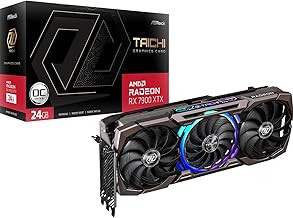
In the high-stakes arena of flagship graphics cards, the AMD Radeon RX 7900 XTX stands as a formidable contender. Built on the groundbreaking RDNA 3 architecture, this GPU isn't just about raw power; it's a statement of AMD's commitment to pushing the boundaries of gaming performance, efficiency, and feature sets. For enthusiasts aiming to dominate at 4K resolution or explore the frontiers of high-refresh-rate gaming, the 7900 XTX presents a compelling alternative to its competitors. This comprehensive review will dissect its capabilities, from real-world gaming benchmarks to its advanced feature suite like FSR 3, helping you decide if this is the graphics powerhouse your rig deserves.
The heart of the 7900 XTX is AMD's innovative chiplet design. Unlike traditional monolithic GPUs, it combines a Graphics Compute Die (GCD) built on a cutting-edge 5nm process with six Memory Cache Dies (MCDs) on a 6nm process. This architectural leap isn't just for show. It enables a massive 96MB of second-generation Infinity Cache, working in tandem with 24GB of high-speed GDDR6 memory on a wide 384-bit bus. The result? Exceptional bandwidth that crunches through the massive textures and complex geometry of modern 4K games without breaking a sweat, minimizing bottlenecks and ensuring smooth, consistent frame delivery.
Gaming Performance Benchmarks: 4K Dominance
Let's cut to the chase: how does the 7900 XTX perform where it matters most? At 4K resolution with maxed-out settings, this card is an absolute beast. In titles like Cyberpunk 2077, Microsoft Flight Simulator, and Hogwarts Legacy, it consistently delivers playable frame rates that transform the gaming experience from a slideshow into a buttery-smooth visual feast. When paired with technologies like FidelityFX Super Resolution (FSR) in its latest iterations, performance sees a significant uplift, often pushing frames well beyond 100 FPS in demanding scenarios. Compared to the previous generation and its direct competitors, the 7900 XTX carves out a strong position, offering exceptional rasterization performance that makes it a top-tier choice for traditional gaming.
Ray Tracing and Upscaling: Closing the Gap
A common historical critique of AMD GPUs has been ray tracing performance. With the RDNA 3 architecture and the RX 7900 XTX, AMD has made substantial strides. While it may not hold the absolute crown in pure path-traced workloads, its ray tracing capabilities are now genuinely competitive. In games like Returnal or F1® 23 with ray tracing enabled, the experience is immersive and performant. Furthermore, AMD's commitment to open standards shines with FSR 3, which introduces Frame Generation. This technology, similar in concept to NVIDIA's DLSS 3, intelligently generates frames to dramatically boost perceived smoothness, giving the 7900 XTX a powerful tool for future-proofing and maximizing high-refresh-rate displays.
Architecture Deep Dive: RDNA 3 and Chiplet Design
To understand the 7900 XTX's prowess, one must look under the hood at RDNA 3. The chiplet design is a masterstroke in efficiency and scalability. By separating the core graphics logic (GCD) from the memory and cache subsystems (MCDs), AMD can optimize each die for its specific task, improving yields and potentially lowering costs. Key features include:
- Enhanced Compute Units: Now with dual issue-stream capabilities and AI accelerators for improved performance in next-gen workloads.
- Second-Gen Infinity Cache: The 96MB cache drastically reduces latency and power consumption associated with fetching data from the VRAM.
- DisplayPort 2.1 Support: A forward-looking feature that enables 4K @ 480Hz or 8K @ 165Hz display output, a clear advantage for early adopters of next-gen monitors.
This architectural foundation doesn't just deliver performance today; it's built to efficiently handle the rendering techniques and higher resolutions of tomorrow.
Thermals, Power, and The Reference Design
The reference model of the AMD Radeon RX 7900 XTX showcases a robust triple-fan cooling solution. Under sustained load, it maintains respectable thermals, though it can run warmer and louder than some premium custom models from board partners like Sapphire, PowerColor, or XFX. Its total board power (TBP) is rated at 355W, which is high but manageable with a quality 800W+ power supply. It's worth noting that many aftermarket models offer superior cooling with larger heatsinks, more aggressive fan curves, and even higher power limits for enthusiasts seeking every last drop of performance, often categorized under the 7900 XTX tag for easy comparison.
7900 XTX vs. The Competition: Value Proposition
When evaluating any flagship GPU, value is a critical component. The 7900 XTX typically positions itself at a compelling price point against its direct competitor, NVIDIA's GeForce RTX 4080. Its value argument is strongest in pure rasterized performance, where it often matches or exceeds its rival. It also boasts more VRAM (24GB vs. 16GB), a significant advantage for content creators, modders, and future games with ever-increasing texture demands. While the ecosystem around features like DLSS and broader ray tracing optimization is currently more mature on the green team, AMD's open-standards approach with FSR 3 (which works on competing GPUs) and aggressive driver updates show a strong commitment to closing any perceived gaps over time.
Who Should Buy the AMD Radeon RX 7900 XTX?
This GPU isn't for everyone, but for the right user, it's a masterpiece. The 7900 XTX is the ideal choice for:
- The 4K Gaming Purist: Gamers who want the highest possible frame rates in traditional rasterized games on a 4K monitor.
- The Future-Proof Builder: Users who value the 24GB VRAM buffer for upcoming games and creative applications.
- The Open-Standards Advocate: Those who prefer vendor-agnostic technologies like FSR and appreciate DisplayPort 2.1's headroom.
- The AMD Platform Enthusiast: Pairing this card with a Ryzen 7000 series CPU enables Smart Access Memory for an additional performance boost.
If your primary focus is on maxed-out 4K gaming today and you want a card with the horsepower to handle tomorrow's titles, the AMD Radeon RX 7900 XTX makes an incredibly persuasive argument. It delivers a top-tier experience, backed by innovative architecture and a strong driver support roadmap, solidifying AMD's place at the pinnacle of high-end gaming graphics.