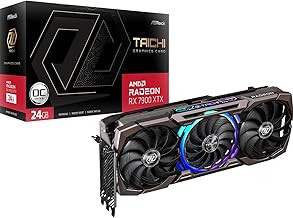
For PC gamers and enthusiasts chasing the pinnacle of visual fidelity and performance, the landscape of high-end graphics cards is fiercely competitive. Among the contenders, AMD's RDNA 3 architecture has made significant waves, and the flagship Hellhound AMD Radeon RX 7900 XTX stands as a formidable beast. This guide delves deep into what makes this card, particularly the Hellhound variant, a compelling choice for powering your ultimate gaming rig.
Unpacking the Power: RDNA 3 Architecture and the 7900 XTX
At the heart of the 7900 XTX lies AMD's groundbreaking RDNA 3 architecture. This isn't just an incremental update; it represents a fundamental shift with its chiplet design. By separating the Graphics Compute Die (GCD) from the Memory Cache Dies (MCDs), AMD achieves greater efficiency and performance scaling. For you, the gamer, this translates to more raw power for pushing pixels at blistering frame rates, especially at demanding resolutions like 4K. The AMD RDNA 3 architecture also brings enhanced ray accelerators, meaning titles with intensive ray-traced lighting, shadows, and reflections run smoother than ever on an AMD card.
Why the Hellhound Variant Stands Out
While the reference RX 7900 XTX is impressive, board partner designs like PowerColor's Hellhound often take things further. The Hellhound branding is synonymous with a sleek, stealthy aesthetic—often featuring a monochromatic or subtly lit design that appeals to builders favoring a clean, focused look over RGB extravagance. More importantly, these custom models typically feature enhanced cooling solutions. A robust multi-fan heatsink assembly ensures the powerful GPU and memory stay cool under sustained loads during marathon gaming sessions or intensive creative work, allowing for higher and more stable boost clocks.
Conquering 4K Gaming: The Primary Arena
The primary domain of a card like this is unequivocally 4K gaming. With its 24GB of high-speed GDDR6 memory and immense compute power, the Hellhound RX 7900 XTX is built to deliver exceptional experiences in modern AAA titles. Gamers can expect to play the latest releases at Ultra or High settings while maintaining frame rates well above the 60 FPS golden standard, often venturing into 100+ FPS territory in less demanding or well-optimized games. This performance level is what truly defines a high-performance graphics card in today's market.
The Ray Tracing Evolution on AMD
Ray tracing has become a hallmark of next-gen visual immersion, simulating how light behaves in the real world. Earlier AMD generations faced challenges here, but the RDNA 3 architecture in the 7900 XTX marks a turning point. Its second-generation ray accelerators provide a substantial leap in ray tracing performance. While the absolute peak ray tracing performance crown might be contested, the Hellhound 7900 XTX delivers a thoroughly playable and visually stunning ray tracing experience in supported titles like Cyberpunk 2077, Resident Evil 4, and Forspoken, especially when paired with AMD's performance-boosting FidelityFX Super Resolution (FSR) technology.
Beyond Gaming: A Content Creation Powerhouse
While marketed as a gaming GPU, the capabilities of the Hellhound 7900 XTX extend far into the realm of content creation. The ample 24GB frame buffer is a boon for video editors working with high-resolution footage, 3D artists rendering complex scenes, and game developers. Applications that can leverage its parallel processing power will see significant reductions in render and export times, making it a dual-purpose card that excels in both play and production.
Building Your System Around the Hellhound 7900 XTX
To avoid bottlenecking such a powerful card, careful system consideration is key. A modern, high-core-count CPU from AMD's Ryzen 7000 series or Intel's 13th/14th Gen is highly recommended. Pair it with at least 32GB of fast DDR5 RAM and a high-wattage, reliable power supply (850W Gold-rated minimum is a good starting point). Ensure your PC case has excellent airflow to complement the Hellhound's own cooling system. This holistic approach ensures you get every frame of performance you paid for.
Hellhound vs. The Competition: A Value Proposition
In the flagship GPU tier, the Hellhound graphics card based on the 7900 XTX often presents a compelling value proposition. It typically offers comparable and sometimes superior traditional rasterization performance to its direct competitors at a lower price point. It also boasts more VRAM (24GB vs. 16GB in some competing models), which is increasingly important for future-proofing at 4K and for creative workflows. For gamers who prioritize raw frame rates and high-resolution textures, the value is clear.
Is the Hellhound AMD Radeon RX 7900 XTX Right for You?
The decision ultimately hinges on your needs and resolution target. If you are a gamer dedicated to PC gaming at 4K resolution, demand high refresh rates, and want a card that also excels at content creation, the Hellhound AMD Radeon RX 7900 XTX is an outstanding choice. Its blend of brute-force performance, efficient RDNA 3 architecture, generous VRAM, and the refined cooling of the Hellhound design makes it a top-tier contender. It delivers a premium experience that pushes the boundaries of what's possible in gaming visuals and performance, solidifying its place as a cornerstone of any elite gaming setup.