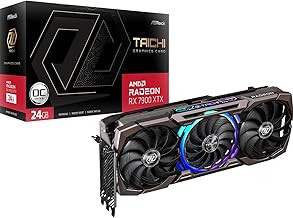
In the fiercely competitive arena of high-end graphics cards, the AMD Radeon RX 7900 XTX stands as a formidable contender, built on the groundbreaking RDNA 3 architecture. Among its various partner models, the Sapphire Pulse RX 7900 XTX offers a compelling blend of raw performance, efficient cooling, and often a more accessible price point than flashier custom designs. This review dives deep into what makes this specific model a top choice for gamers targeting ultra-high frame rates at 1440p and 4K resolutions.
As a cornerstone of high-end GPU offerings, the 7900 XTX is designed to compete at the very top. The Sapphire Pulse variant brings this power into a well-engineered package, focusing on reliability and effective thermal management. For enthusiasts building a powerful PC gaming rig, understanding the nuances of this card is crucial for making an informed purchase.
Unpacking the Sapphire Pulse RX 7900 XTX: Design & Build
Sapphire's Pulse series is renowned for delivering excellent performance without the excessive premium of their flagship Nitro+ line. The Pulse RX 7900 XTX follows this philosophy with a robust, dual-fan cooler shrouded in a sleek black design with subtle red accents. It's a card that prioritizes function, featuring a substantial heatsink array and heat pipes that make direct contact with the GPU die and memory modules.
The build quality is solid, with a reinforced metal backplate that not only adds structural rigidity to prevent GPU sag but also aids in heat dissipation for the rear components. This attention to construction detail is essential for a heavy, high-performance card like the 7900XTX, ensuring longevity and stable operation over years of demanding use.
RDNA 3 Architecture & 24GB GDDR6: The Performance Foundation
At the heart of the Sapphire Pulse lies the Navi 31 GPU, the flagship of AMD's RDNA 3 generation. This architecture introduces a chiplet design, separating the Graphics Compute Die (GCD) from the Memory Cache Dies (MCDs). This innovation improves manufacturing yield and allows for a massive increase in transistor count and efficiency. Coupled with 24GB of high-speed GDDR6 memory on a wide 384-bit bus, the card has immense bandwidth to feed its 96 Compute Units (CUs).
This combination is tailor-made for 4K gaming. The vast 24GB frame buffer is future-proof, easily handling today's most demanding games with ultra-texture packs and will be crucial for upcoming titles utilizing advanced ray tracing and AI-upscaling technologies like FSR 3. Whether you're exploring vast open worlds or engaging in fast-paced competitive shooters, the gaming graphics card has the resources to deliver a smooth, immersive experience.
Gaming Performance Benchmarks: 1440p, 4K & Ray Tracing
In real-world testing, the Sapphire Pulse RX 7900 XTX consistently delivers exceptional frame rates. At 1440p resolution, it easily surpasses the 144 FPS mark in most titles at max settings, making it an ideal partner for high-refresh-rate monitors. Stepping up to 4K, it truly shines, often delivering 60+ FPS and frequently reaching 80-100+ FPS in well-optimized games without ray tracing enabled.
Ray tracing performance, historically an area where AMD trailed, sees significant improvement with RDNA 3. While the AMD RDNA 3 architecture still lags behind NVIDIA's best in pure path-traced workloads, in hybrid rendering games that use ray tracing for select effects (like shadows, reflections, or ambient occlusion), the 7900 XTX performs admirably at 4K, especially when AMD's FidelityFX Super Resolution (FSR) is enabled for a performance boost.
Thermals, Acoustics, and Power Efficiency
Sapphire's Dual-X cooling solution on the Pulse model is highly effective. Under sustained load, GPU temperatures typically remain in the mid-70s to low-80s degrees Celsius, which is excellent for a card of this class. The fans, while audible under full load, maintain a relatively smooth sound profile without obtrusive whine or coil buzz. Power draw aligns with expectations for a flagship card, typically peaking around 350-400 watts under gaming loads. A quality 750W-850W power supply is strongly recommended for a system built around this GPU.
Sapphire Pulse vs. The Competition & Other 7900 XTX Models
When comparing the Sapphire Pulse to other custom AMD Radeon RX 7900 XTX models like the ASUS TUF, PowerColor Red Devil, or Sapphire's own Nitro+, the Pulse often positions itself as the value leader. It sacrifices some of the extreme overclocking headroom and premium materials (like vapor chamber cooling) for a lower price, while retaining the core performance of the reference design. For most gamers who want flagship performance without paying for extreme overclocks they may never use, the Pulse represents a sweet spot.
Against its direct competitor, the NVIDIA GeForce RTX 4080 SUPER, the battle is nuanced. The 7900 XTX generally offers superior raw rasterization performance and more VRAM (24GB vs. 16GB) for a similar or lower price. However, NVIDIA holds advantages in ray tracing performance, DLSS 3 frame generation, and features like superior broadcast and Reflex. The choice often comes down to which feature set and game library align best with the user's priorities.
Who Should Buy the Sapphire Pulse RX 7900 XTX?
This card is an ideal fit for a specific type of gamer. It's perfect for the enthusiast who:
- Primarily games at 1440p with a high refresh rate (144Hz+) or 4K at 60Hz+.
- Values raw rasterization performance and a large VRAM buffer for future-proofing.
- Prefairs the value proposition of AMD's platform and utilizes features like FSR.
- Appreciates a no-nonsense, well-cooled design from a reputable AIB partner like Sapphire.
It may be less suitable for users whose primary focus is on cutting-edge, full ray/path tracing experiences or who heavily rely on NVIDIA-specific productivity and streaming features.
Final Verdict: A Flagship Performer with Pulse Efficiency
The Sapphire Pulse AMD Radeon RX 7900 XTX successfully captures the essence of what makes the 7900 XTX platform great: immense gaming power, a generous 24GB of 24GB GDDR6 memory, and the efficiency of the RDNA 3 architecture. Sapphire packages this into a cooler that is both capable and relatively compact for a flagship card, all while often undercutting the price of more extravagantly designed models.
For gamers building a high-end system focused on maxing out today's and tomorrow's games at 4K, the Sapphire Pulse variant stands out as one of the most sensible and high-performance choices in the upper echelon of the GPU market. It delivers nearly all the performance of more expensive models where it counts most—in the game—making it a champion of value in the flagship segment.