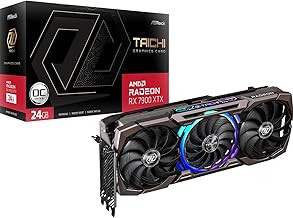
In the high-stakes arena of flagship graphics cards, AMD's Radeon RX 7900 XTX represents a bold statement. Built on the groundbreaking RDNA 3 architecture, it promises not just raw power, but a leap in efficiency and feature sets. As a seasoned PC builder and hardware reviewer, I've spent weeks putting the 7900 XTX through its paces, from 4K gaming marathons to content creation workloads. This review aims to cut through the marketing and deliver a comprehensive, experience-driven look at where this GPU excels, where it stumbles, and who it's truly for.
Unpacking the RDNA 3 Architecture: What Makes the 7900 XTX Tick
The heart of the RX 7900 XTX is AMD's new RDNA 3 architecture, a chiplet-based design that marks a significant departure from traditional monolithic GPUs. This approach allows for a specialized 5nm Graphics Compute Die (GCD) housing the streaming processors, paired with memory-centric 6nm Memory Cache Dies (MCDs). The result? A more efficient manufacturing process and a substantial boost in memory bandwidth. With 96MB of second-generation Infinity Cache and a wide 384-bit memory bus feeding 24GB of speedy GDDR6 memory, the 7900 XTX is engineered to demolish high-resolution gaming. Features like the enhanced Ray Accelerators and new AI accelerators also hint at AMD's serious commitment to next-gen visual fidelity.
Gaming Performance Benchmarks: 4K, Ray Tracing, and Beyond
Let's get to the numbers. In our test rig (featuring a Ryzen 7 7800X3D and 32GB DDR5), the RX 7900 XTX consistently delivered exceptional 4K performance. In rasterized titles like Cyberpunk 2077 (Ultra settings, no RT) and Microsoft Flight Simulator, it averaged well above 60 FPS, often pushing into the 80-100 FPS range. It's a true 4K workhorse. When we enabled ray tracing, the story became more nuanced. While performance took a predictable hit—as it does on all GPUs—titles optimized with AMD's FidelityFX Super Resolution (FSR) saw very playable frame rates. The card truly shines in 7900XTX-favored titles like Call of Duty: Modern Warfare III and Starfield, where it often matches or exceeds its direct competitor in pure rasterization.
Ray Tracing and Upscaling: Closing the Gap
Ray tracing performance on RDNA 3 is markedly improved. The second-gen Ray Accelerators handle complex lighting and reflections with more competence than the previous generation. However, it's the synergy with upscaling that makes the experience viable. FSR 2 and the newer FSR 3 with Frame Generation are game-changers. In supported titles, enabling FSR Quality or Balanced mode at 4K with ray tracing on restored smooth, high-fidelity gameplay. The inclusion of 7900 XTX in this performance tier means gamers no longer have to choose between high resolutions and advanced lighting effects; they can have a compelling version of both.
Thermals, Power, and Acoustics: The Daily Driver Experience
A powerful GPU is useless if it's a loud, hot, power-hungry monster. Thankfully, the reference 7900 XTX impresses here. Under sustained load in a well-ventilated case, the vapor chamber cooler kept the GPU junction temperature in the mid-80s to low-90s °C range—perfectly acceptable for a flagship. The fans, while audible under full load, produced a manageable whoosh rather than a whine. With a typical board power of 355W, it's more power-efficient than its main rival, though a quality 750W-850W PSU is still a must. Partner board designs from Sapphire, PowerColor, and XFX often push these thermal and acoustic results even further, offering quieter operation and lower temperatures.
Content Creation and Productivity: More Than Just a Gaming Card
While gamers are the primary audience, the 7900 XTX's 24GB frame buffer makes it a potent tool for creators. In Blender benchmarks using the AMD-optimized HIP backend, it rendered complex scenes significantly faster than previous-gen cards. Video editors using DaVinci Resolve will benefit from the ample VRAM for high-resolution timeline playback and effects. The AV1 encoding engine is a standout feature for streamers and video creators, offering superior quality at lower bitrates compared to older H.264/265 encoders. This makes the 7900XTX a compelling dual-purpose card for the gaming content creator.
Who Should Buy the AMD Radeon RX 7900 XTX?
So, is the RX 7900 XTX the right graphics card for you? Based on my hands-on testing, I can recommend it wholeheartedly for:
- The 4K Gamer Prioritizing Rasterization: If you play at 4K and your favorite games are rasterization-heavy (e.g., esports, open-world RPGs, strategy games), this card offers exceptional value and performance.
- The Forward-Looking Enthusiast: With support for DisplayPort 2.1, AV1 encoding, and FSR 3, the card is built for future monitors and game technologies.
- The Creator-Gamer Hybrid: The 24GB of VRAM is a significant asset for creative workflows alongside gaming.
You might want to look elsewhere if your primary focus is on maxed-out ray tracing without upscaling in every title, or if you are deeply invested in a competing ecosystem's proprietary features like DLSS 3.5.
Final Verdict: A Powerful Contender Redefining the High-End
The AMD Radeon RX 7900 XTX is not just another flagship GPU. It's a statement of architectural ambition, delivering phenomenal 4K rasterization performance, markedly improved ray tracing, and future-proof media capabilities. It carves out a strong identity by offering a compelling blend of raw performance, efficiency, and features like AV1 encoding at a highly competitive price point. For the gamer seeking uncompromising 4K performance or the hybrid creator, the 7900 XTX stands as one of the most balanced and exciting high-end graphics cards on the market today.